Wednesday, January 27, 2010

Today's lesson: Ordering sushi (or at a Japanese establishment)

Mina-san, Konbanwa.

Jeremi desu.


Today's Kana of the day:

Hiragana:
さ-Sa し- Shi す- Su せ- Se そ- So
Katakana:
サ- Sa シ- Shi ス- Su セ- Se ソ-So


Today's lesson: Ordering sushi!

Today's lesson will focus on the ability to efficiently and freely order at a Japanese outlet. Today's context will be based more around sushi, but is flexible in other areas, too. We will be learning a few general words (Such as food, drink, etc), verbs, nouns and adjectives which are relevant towards purchasing.
Let's begin!

First phase of lesson: Learning new vocabulary


Chopsticks- Ohashi
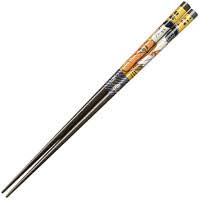
Ohashi- Chopsticks

Salmon- Sake (Pronounced exactly like the alcoholic rice beverage, but also means salmon)

Sake- Salmon


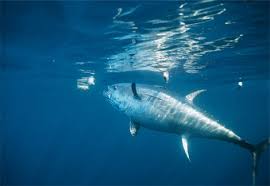
Tuna- Maguro
Maguro- Tuna


Sushi store- Sushiya ( A common name for many foreign sushi stores)

Sushiya- Sushi


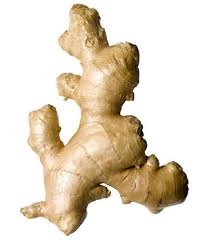
Ginger- Shooga

Shooga- Ginger


Horse radish- Wasabi (Quite commonly referred to as Wasabi, even in Western nations)


Seaweed- Kaiso ( Kai meaning sea, so can refer to plant)

Kaiso- Seaweed


Napkin (Serviette)- Napukin (Yes, this word is a Gairaigo word)
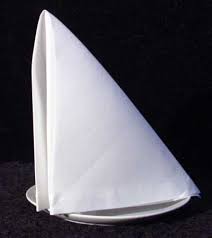
Napukin- Napkin


Discounted- Waribiki

Waribiki- Discounted


To want something- Hoshii

Hoshii- To want


To sell - urimasu (uru)

Urimasu (Uru) - To sell

To buy- kaimasu (kau)

Kaimasu (kau)- To buy

Food- Tabemono (The word for Japanese food specifically is Washoku)

Tabemono- Food

Drink- Nomimono (Notice the verb to drink is "Nomimasu", adding mono makes it the verb. This is the same with Tabemono, adding mono to Taberu). Please take note that O-cha is the Japanese word for tea (which doesn't directly mean green tea, but usually is referred to green tea due to its availability in Japan).

Nomimono- Drink


Phase 2: Using learned vocabulary into formed sentences.


Are you offering discount?- Waribiki ga arimasu ka?
Waribiki- discounted, ga-particle connecting waribiki to arimasu, arimasu- to do.


This sushi store is my favourite!- Kono sushiya wa okiniiri desu.
(Kono- This, sushiya- sushi store, wa- is, okiniiri-favourite.)


I want that sushi- Sono sushi ga hoshii desu.
(Sono- that, ga-particle connecting sushi to hoshii, hoshii- want)


Ginger, please- Shooga wo kudasai.
(Shooga- ginger, wo- another particle, kudasai- please.


Ikura wa nan desu ka?


I want tuna sushi!- Maguro no sushi wa hoshii desu.
(Magura no- Tuna (posessive to sushi), hoshii-to want)


Where is the sushi store?- Doko wa sushiya desu ka?
(Doko wa- where is, sushiya- sushi store, desu ka- ??)


Thanks for reading my lesson!

Ganbatte mina-san!


Saturday, January 23, 2010

Today's lesson: Common Verbs


Mina-san, Konbanwa.

Jeremi desu.


Today's Kana of the day:

Hiragana

Ka Ki Ku Ke Ko
か き く け こ

Katakana

Ka Ki Ku Ke Ko
カ キ ク ケ コ

Once again, please memorise these by writing them down numerous times,
and then revise them for a few days after!


Today's lesson: Common verbs

Hello, everyone! I would like to apologise for my lack of activity, and not posting a Japanese lesson for like a week now- It's due to the fact that my homeline had a fault and wasn't able to access the internet, nor my phone.
I hope that everyone took advantage of this absence of new lessons, by revising previous ones.
Today's lesson we will be covering a few basic verbs, and then putting them into context.
We will be learning essential verbs such as : To swim, To jump, to run, etc.
Although, I have previously covered verbs, I didn't do it so user-friendly,
and so will stick to this key factor this time.

Vocabulary: Verbs

To run- Hashiru (Hashirimasu) (Notice that in its present tense form, Hashirimasu, the U is removed, and is replaced with an i. )

Hashiru (Hashirimasu)- To run

To eat- Taberu (Tabemasu)

Taberu- Tabemasu

To walk- Aruku (Arukimasu) (Notice again that the U is replaced with an i. This is a rule you must remember when using it in the "masu", or "mashita" (pre-tense) form)


Aruku (Arukimasu)- To walk


To jump- Tobiagaru (tobiagarimasu )

Tobiagaru (Tobiagarimasu)- To jump

To pray- Inoru (Inorimasu)

Inoru ( Inorimasu)- To pray

To think- Omou (Omoimasu)

Omou (Omoimasu)- To think.

To play- Asobu (Asobimasu) (Can only be used in a activity context, not playing an instrument, etc)


Asobu ( Asobimasu) - To play.


To play (a string instrument) - Hiku (Hikimasu)

Hiku ( Hikimasu) - To play a stringed instrument.

To play ( A blow instrument)- Fuku (Fukimasu)

Fuku (Fukimasu)- To play a wind instrument

To play ( A drum instrument)- Tataku (Tatakimasu)

Tataku (Tatakimasu)- To play a drum instrument.

To cry- Naku (Nakimasu)

Naku (nakimasu)- To cry

To smile- Hohoemu (Hohoemimasu)

Hohoemu (Hohoemimasu)- To smile.

The verbs in sentence:


Why are you crying? - Naze nakimasu ka?
(Naze- why, nakimasu- to cry, ka- ? )

Are you playing the shamisen?- Shamisen ga hikimasu ka?
(Shamisen- Japanese guitar, ga-connects to verb, hikimasu- to play a string instrument).

Where are we eating?- Watashi tachi ga doko ga tabemasu ka?
(Watashi tachi- we, ga- connected to where , doko- where, ga- connects where to eating)

When are you walking?- Itsu ga arukimasu ka?
(Itsu- when, ga- connects when to the verb to walking, arukimasu- to walk)
(Note: This doesn't refer to a stroll, but the ability to walk.)

I want to smile- Hohoemitai.
Hohoemi( smile), tai (to want)

Are you running?- Hashirimasu ka?

What are you doing now? I am playing a flute. Why are you playing a flute? Because it's fun.-
Ima nani o shiteimasu ka?. Furuuto ga fukimasu. Naze furuuto ga fuki masu ka? Tanoshii kara.
(Ima- now, nani-what, o- particle connecting, shiteimasu- doing, ka-?. Furuuto- flute, ga-connecting particle, fukimasu- to play. Naze- Why. Tanoshii-fun, kara-because).

I hope you enjoyed this lesson!

Thanks :)


Friday, January 15, 2010

A note to my students, Hiragana and katakana

Konnichiwa, Mina-san.

Jeremi desu.

An important note to my students

I trust that everyone is refreshed and has gotten accustomed to the previous lessons!
I'd just like to stress the importance of reviewing previous lessons, it's an essential to retain anything that you learn in life, really, especially a language. The same is true for Japanese!

Here at 2011 Japan, we stress that preparation is necessary in order to move up the language ladder. We are doing exactly that, making sure that everyone is accustomed to the beginner's vocabulary. We are also aware of the professional industry standard for Japanese learning: So, we mould our lessons in order to accommodate to this standard! I would also like to recommend that you learn a few hiragana symbols and katakana symbols a day,
start off with the basic vowels "a i u e o" and then go on to "ka ki ku ke ko", etc! In order to fully qualify as having passed beginner's level (officially), you must memorize your hiragana and katakana. Do not try and bite too much off when learning these phonetics, slow it down and enjoy it. 2011 Japan will make this process easier by integrating Romaji (English characters) and Kana (Hiragana and katakana) side by side, making it more of an instinctual memorisation :) .


HIRAGANA


KATAKANA

I will soon be posting another lesson, the topic : Space!


Ganbatte kudasai,


Jeremi.

Space, The final frontier.

Konnichiwa, Mina-san.


(In order to help my students memorise their kana, we'll have kana of the day! This will be the kana which I list usually of here, and the challenge is to memorise and review these kana characters. )

Today's kana of the day: Hiragana
あ- A い- I う- U え- E お-O

Today's kana of the day: Katakana
ア- A イ- I ウ- U エ- E オ- O

(Please try and embed them into your memory, by writing them multiple times and then pronouncing their phonetic / sound. I'll test you at the end of the lesson to see if you remembered them!)


Today's lesson: Space, the final frontier.


Today's lesson is of a beginner's level, and is adequate for all. It will involve verbs (e.g to fly, to rotate, to remain still, to be silent, etc) , nouns associated with space (Spaceship, meteor, stars, etc) , adjectives (Beautiful, amazing, wonderful, etc) and planets (Earth, Mars, Pluto, etc).

The beauty of space is truly awe-inspiring. The immense contrasts between the dark, blank vacuum of space and its bright and vibrant counterparts. The illuminance and pigmentation of stars, the hypnotising colours of nebulae and astronomical anomalies. Space's aesthetics is pleasing to all humans.

. . . . . . . And, on that note, let's start off with some adjectives!

Part 1: Adjectives.

Describing the beauty of space is challenging as it is, and we may as well learn some general adjectives which can be applied anywhere,too! (We'll then later on use these in sentences, in part 2. Why? Sometimes a little added pressure to remember can be useful ;) ).

Wonderful- "Fushigi na", an expression used to show your happiness towards something, just like English's Wonderful. Fushigina, Foo- shee- gee- nah. Recite it, memorise it, and enjoy it.

FUSHIGI NA!- Wonderful!

Mysterious- Shinpitekina, a word used to describe something as non understandable, or non predictable.

Shinpiteki na!- Soooo mysterious.

Pretty- Kirei is the general word which means beautiful, appealing to the eye (weaker than beautiful).

Kirei- Pretty.

Utskushii- Beautiful, a stronger version of kirei.

Utskushii- Beautiful.


Inspiring - Although it's not a direct translation (it's more like emotion enducing, but a bit stronger? Comparatives are always difficult to teach). Kangekitekina.

Kangekitekina!- So inspiring!


Part 2: Planets & a few nouns.

Let' start off with the planets.. and specifically with the most relevant ;) This is only a beginner's lesson after all, the stress is on describing and understanding, not knowing niche language :).

Planet- The general word for a celestial body that is or was orbiting a star or stellar remnant and is massive, or a planet :P is waku-sei.


Earth- Chikyuu is the Japanese word for Earth. (Note: Chikyuu on refers to the planet Earth, "do" refers to soil, and "shizen" refers to nature).

Chikyuu- Earth.


Moon- The Japanese word for moon is "Tsuki" (Most anime lovers would know this!).

Tsuki- Hime.

Sun- The Japanese word for sun, is Taiyou.

Taiyou- Sun


Space- And of course we shall learn the general word for space, which is Chuu.

Chuu- Space

Star- Hoshi, refers to any form of star (dramatised (children's drawing type) , space stars, etc Sometimes can refer to celebrities, too!)

Hoshi- Star


Spacecraft- Uchuusen (See the "chuu", from space?) is the Japanese word for a space craft. (Refer to most large water ships as "Fune", and "hikooki" to airplanes).

Uchuusen- Spacecraft

Alien- The Japanese word for Alien is Uchuujin (literally, "space person")

Uchuujin- One who lives in space / Alien.


Astronaunt- Uchuuhikoushi, literally space professional is the Japanese word for Astronaunt.

Uchuuhikoushi- Astronaunt

Satelite- Simply "ei-sei".

Ei Sei- Satelite


Part 3: Phrases!

We will now apply the vocabulary that we just learned into phrases!

Uchuu wa totemo kangekiteki na!- Space is very awe-inspiring.
うちゅう は かんげきてきな
(Uchuu- space, totemo-very, kangekiteki na- inspiring)

Kono Uchuusen wa shinpitekina- This space ship is mysterious.
この うちゅうせん は しんぴてきな
(Kono- this (possesive), Uchuusen- spaceship, shinpitekina-mysterious)

Kono ei-sei ga jinkouchinou ga arimasu ka?- Does this satelite have artificial intelligence?
この えい-せい が じんこうちのう が あります か?
(Kono- this, ei-sei- satellite, jinkouchinou-artificial intelligence, arimasu- to be/have)

(Thanks to Mai Sasaki (on face book) for confirming the above sentence was correct, I was a bit un sure :)

Ano waku-sei wa fushigina!- That (far away) planet is strange (beautifully unique).
あの わく-せい は ふしぎな!

Uchuujin wa midori desu ka?- Are aliens green?
うちゅうじん は みどり です か?


Monday, January 11, 2010

Today's lesson: Clothing

Konnichiwa, Minasan.

Jeremi desu.


Today's lesson: Clothing (Beginner's lesson)

Mina-san, o-genki desu ka? How are you, everyone? Nihongo no benkyo wa dou desu ka? How is Japanese studying? (Nihongo no benkyo- Japanese study, dou- how is).For today's Japanese lesson, we will be learning clothing related vocabulary. That means we will be learning the names associated with common clothings , and how to use those clothings in a sentence. In Japanese, there are specific wearing verbs, for example the verb "to wear" when referring to a dress is completely different compared to wearing a shirt, or glasses etc. It can get annoying, but just commit it to memory and you'll be fine. Okay, let's begin!

Initial phase of the lesson, the vocabulary:


Dress- Wanpisu
Wanpisu- Dress


Shirt- Shatsu
Shatsu- Shirt

Pants- Zubon
Zubon- Pants

Shoes- Kutsu

Kutsu- Shoes

Socks- Kutsushita (Think of "Kutsu" for shoes, and add "shita", in order to get socks! Easy, right?)

Kutsushita- Socks

Shorts- Hanzubon (Literally, "Half pants". Han is a prefix which means half. Easy to remember :) )

Hanzubon- Shorts

Skirt- Gairago word, sukaato.

Sukaato- Skirt.


Scarf- Mafura
Mafura- Scarf

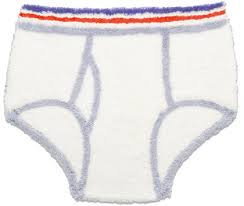
Underwear- Pantsu ( Think of pants!)

Pantsu- Underwear


Jeans- Jiinzu (Yet another gairaigo word :) )

Jiinzu- Jeans


Hat- Boushi (Refers to hats in general)

Boushi- Hat

Sunglasses- Sungarasu
Sungarasu- Sunglasses

Kiteimasu = to wear (shirts, jackets, dresses)
Haiteimasu = to wear (pants, socks)
Shiteimasu = to wear (watch, bracelet)
Kaketeimasu = to wear (glasses)
Kaburimasu= To wear (hat)

Second phase: Using clothing in sentences, in contexts of wearing and describing.

Now on to the second half of the lesson, the application of the learned words into phrases.
We will use phrases which describe clothing, and also the actual wearing of clothing.
So, without further a due!

Zenbu wo Haiteimasu- I'm wearing pants.

(Zenbu- pants, haiteimasu- to wear)

Naze Sangarasu wo kaketeimasu? attatakai kara- Why are you wearing sunglasses? Because it's fine.

(Naze- why, sangarasu- sunglasses, kaketeimasu- to wear, attatakai- fine, kara-because.)

Wanpisu wo kiteimasu- I'm wearing a dress.

(Wanpisu- Dress, kiteimasu- to wear)

Sukaato wo haiteimasu- I'm wearing a skirt.

(Sukaato- skirt, haiteimasu- to wear)

Midori kutsu wo haiteimasu- I'm wearing green shoes.

(Midori- green, kutsu- shoes, haiteimasu- to wear)

Naze fuyu de sukaato wo haiteimasu ka? . ..Kawaii kara. - Why are you wearing a skirt in winter... Because it's cute.

(Naze- why, sukaato- skirt, haiteimasu- to wear, fuyu- winter, de- in, kawaii-cute, kara-because.)

Nani wo haiteimasu ka?- What are you wearing (below waist)?
(nani wo- What, haiteimasu-to wear)

Nani wo kiteimasu ka? - What are you wearing (above waist)?

Anata no sukaato wa chou kawaii!- Your skirts cute!
(Anata no- Your, Sukaato- skirt, chou - very, kawaii-cute)

That concludes this lesson!

Hope you enjoyed it :)

Jeremi