Konnichiwa,
Jeremi desu.
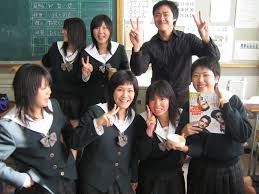
I hope that you are enjoying the many posts that my blog currently has! Today's lesson will be based on school vocabulary: Japanese words related to subjects, and school related nouns.
Well, enjoy!
Today's lesson: School vocab.
We shall start off the lesson by learning, or at least looking at, the words will need to know for parts of today's lesson. After we have covered these, we will integrate them into sentences in order to refresh our memories and actually learn something. The lesson will be broken up into 2 parts. I don't want to introduce all of the vocabulary at once for fear of giving you all too much to bite off. We want to cover in today's lesson more of the essentials, the basics of school related vocabulary.
Initial vocabulary: Courses/subjects.
Lesson: Quite simple, and easy to remember: Ressun.
Mathematics: Suugaku. す-su う-u が-ga (" added to ka makes it ga, this applies to all K" e.g Ki" becomes gi) く -ku
 Suugaku- Mathmatics
Chemistry - kagaku か-ka が-ga く-ku
 Kagaku- Chemistry
English: Eigo え- E い- I ご- Go ( See? It's simple, adding the " changes the K to G)
 Eigo- English
Japanese: Kokugo こ- Ko く- Ku ご- Go (Nihongo refers to the language itself, where as kokugo refers to Japanese literature taught in schools)
 Kokugo- Japanese literature
History: Rekishi-れ-re き- ki し- shi
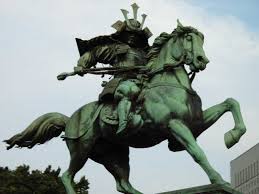 Rekishi- History
Physical Education: Taiiku た- Ta い- i い- i く-ku
 Taiiku- Physical education
Religion: Shuukyou し-Shi ゅ- Yuう, shi and yuu combined make Shuu. き-ki ょ-yo, Ki and yo combined make kyo. う- u
 Shuukyou- Religion
Geography- Chiri, ち- Chi り-Ri
 Chiri- Geography
Economics- Keizai け- Ke い- i ざ-sa い-i, read as zai due to " changing the S sound to Z sound.
 Keizai- Economics
Biology- Seibutsu せ- Se い- i ぶ- bu (" changes f to b) つ- tsu
 Seibutsu- Biology
Physics- Butsuri ぶ- Bu つ- tsu り-ri
 Butsuri- Physics
Home economics- Kadeika か- Ka て- de い- i - ka
 Kadeika- Home economics
Phrases using above vocabulary
Watashi no okiniiri ressun ga Seibutsu- My favourite lesson is biology.
Naze shuukyou kiraina? Tsumaranai kara- Why do you dis like religious education? Because it's boring!. (Does this seem like a mouthful? It's not! Naze, means why, and you say at the start of the sentence. Kiraina simply means to dislike. Tsumaranai means boring. Adding kara at the end of a sentence adds "because").
Keizai ga dai suki desu ka?- Do you like Economics? (The sentence literally means "like economics?" In Japanese it's not necessary to add you into the sentence if it's implied. The ga particle simply connects Keizai, or economics, to the sentence).
Nihongo no rekishi ga furui- Japanese history is old. (Furui means old) (The no particle makes Japanese possessive to history therefore, Japanese history. It's required in Japanese.)
Kadeika ga omoshiroi desu ne- Isn't home economics quite interesting?
Suugaku ga totemo muzukashii- Mathematics is very difficult.
Butsuri ga kantan desu- Physics is easy.
School related nouns
Pen- This is a very simple translation, pen = pen in Japanese.
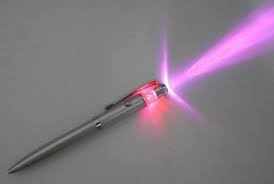 Pen- pen
Books- The Japanese word for book, is "hon".
 Hon- book
  Kokuban- Black board
Table- Another simple english - japanese translation is table, it's Japanese meaning is Teburu. There are lot of English to Japanese bastardizations made.
 Teburu- Table
 Isu- Chair
  Heya- Room
 Kurasu ruumu- Japanese word for Class Room. Another bastardization of an english term to Japanese. Quite easy to remember! (note: sometimes Ruumu is used to refer t
o a room, but to be safe, it's important to know Heya, as well.)
 Door- Another foreign word imbedded in Japanese (these types of words are known as gairaigo, a foreign-
Above vocabulary used in phrases:
Ano doa no iro wa niji da yo!- That door's colour is rainbow ( iro means colour, ano is used as "that") (Rainbow is also reffered to as "Reinbo", that's its gairaigo version.).
Watashi no pen wa kara desu- My pen is empty (Kara can also mean "empty")
Watashi tachi no kurasu ruumu wa ippai desu- Our class room is full (Watashi tachi means we, add no and it becomes our).
Isu wo kudasai- Chair, please.
Teburu ga arimasu- I have a table.
(Note: Arimasu means to have something that's inanimate. Use imasu if you're referring to something that you posses, and it's animate e.g kodomo ga imasu, I have children).
Just a quick, extra addition of vocabulary! It will only take a second to revise, and as a result I didn't see a point in adding a whole section dedicated to it. Seito means pupil. Seito. Gakko. Gakko means school. Sensei can only be used as a title for a teacher. The actual word for teacher in Japanese is kyoshi. Kotogakko means highschool, therefore kotogakko no gakusei means high school student. Gakusei is a general word which means student, it is more often used than seito.
So, that's today's lesson's conclusion!
Thanks for reading!
Jeremi


 Posts
Posts



i like ur blog, Jeremi.....
ReplyDeletelet me introduce my self, Watashi wa Retno desu..
i live in indonesia...
actualy i realy want to school in japan...
my nihon-go teacher said that i can get the scholarship to go to japan for 35 days...
if, i can to memorize a 300 of kanji, n 800 of the word...
but, i felt it's so difficult to me, cause i still learn a nihon-go for 1 year...
now, i still memorize a HIRAGANA N KATAKANA...
so, can u give me some suggestion???