Konbanwa Mina-san,
Jeremi desu!
You walk into the local konbini and are greeted with a flood of "irrashaimase!" as you are entering. You feel a bit anxious, not fully comprehending their welcome. You gaze at the international phone card laying inanimately on the desk. It's blatantly apparent that its genka is not written anywhere. You need this card. You need to ask for assistance. The essential phrase "Ikura wa nan desu ka?", or its more colloquial form "ikura?", has vanished from your mind, leaving you blank. One of the polite sales assistants, seeing your obvious distress, "Nani o-o sagashi desu ka?" she enquires. You begin to feel lightheaded, and regret your lack of commitment to Japanese study.
I'm sorry guys, I couldn't resist. That scenario was quite extreme (in reality they would of possibly known more English) , but the anecdote did high light the importance of understanding shopping vocabulary. So, what are we learning today then, I wonder?? ;)
Today's lesson: At the market! (A useful beginner's lesson)
Today's lesson will be based on vocabulary which is related to... You guessed it right, shopping!
This will be immensely useful lesson as it will allow you to communicate effectively while purchasing items, and to enable confidence in your purchases! We will be learning useful phrases, and nouns / adjectives (such as different stores, items, sizes, ages, prices etc). So, let's commence today's lesson!
Types of stores
We'll start off by learning the associated Japanese names for specific types of stores. A lot of the names are gairaigo ( a word covered in yesterday's lesson, meaning a word of foreign origin) and as a result won't require to much difficulty to commit most of these words to memory. The general word for store is, MISE.
Drug store- The Japanese word for drug store, "Duraggusutoa". It's gairaigo-ness, is quite predictable, is it not?
 Doraggusutoa- Drug store
Department store- Another gairaigo word, "depato".
 Depato- Department store
Convenience store- "konbini", another similar sounding word to its English counter.
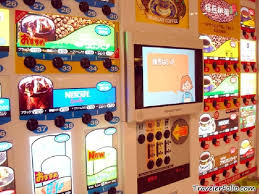 Konbini- Convenience store
Supermarket- Yet another usage of gairago in the Japanese language, "supamaketto".
 Supamaketto- Supermarket
Discount store- "Disukauntosutoa". That's simply it!
 Disukauntosutoa- Discount store
Book store- The Japanese word for bookstore, one of the few not gairago store type words, "shobou".
 Shobou- Book store
Grocery store- Finally, our last store type word. The Japanese word for a grocery store is Kanbutsuya. This only applies to the small produce selling stores / dairies etc.
 Kanbutsuya- Grocery store.
Above words used in a phrase...
It's time to phrase-ify the above words!
Sumimasen. Doko wa diskauntosutoa desu ka?- Excuse me, where is the discount store?
(Sumimasen- excuse me, doko- where, disukauntosutoa- discount store, desu ka- is it ??)
Itsu wa mise hiraiteimasu ka?- When is the store open?
(Itsu- when, mise-store, hiraiteimasu- to be open)
Ano konbutsuya wa takai desu ka?- Is that grocery store expensive?
(Ano- that, over there. Konbutsuya- grocery store, takai- expensive)
Naze ano doraggusutoa ikimasu ka? Yasui kara- Why do I go to that drug store? Because it's cheap!
(naze=why, ano=that over there, doraggusutoa=drug store, ikimasu=to go, yasui=cheap, kara=because)
Kore wa shobou desu ka?- Is this a book store?
Useful shoppin' phrases!
Now that we are aware of the different types of store names, we can now move onto useful phrases to use within them / in a shopping situation.
Ie, ii desu- No thank you. (literally "no, it's good")
(Ie- no, ii-good, desu-it's)
Ikura ?- How much is it? (Ikura wa nan desu ka, can also be used when wanting to be more polite)
(Ikura- How much)
Irasshaimase!- Welcome! ( Used only in store welcoming situations)
Nani o o sagashi desu ka?- What is it are you looking for?
(Nani- what, sagashi-looking for, desu ka- is it?)
Are ga ii desu- That over there is good!
(Are- that over there, ii-good)
Dore ga ichiban yasui desu ka?- Which is cheapest?
(Dore-which, ichiban- best, yasui-cheap)
Useful adjectives and nouns
On to the final part of the lesson, we will cover some basic nouns and adjectives that will be useful to know.
Money- O-kane
 Okane- Money (Please note that yen in Japanese is "En")
Cash- "Genkin", this is a payment type meaning cash in Japanese. Must only be used to refer to coins and notes (money in physical form)
 Genkin- Cash
Credit card- "kurejito kado" A simple, gairaigo word meaning credit card, as you probably may have guessed!
 kurejitto kado- Credit card
Small- "Chiisai" is the Japanese adjective which means "Small". That's pretty much it!

Big- The Japanese adjective meaning large, as in every manner width/height/etc, is "Okii"
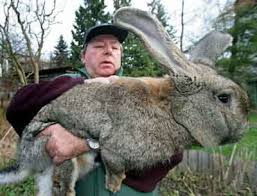 Okii- Big ( Usagi wa okii desu ne!)
Expensive- The Japanese adjective meaning expensive is known as "takai". Please note that it also commonly used to mean "tall" (tall in reference to a non-animate being, otherwise it's sega takai e.g Otokonohito wa sega takai desu ne- Isn't the man tall?!)
 Takaii- Expensive
 Kaban- The word which means bag.
Price- Genka, this in reference to the price of something, its commercial value.
 Genka- Price
New- Atarashii is a word that means new.
 Atarashii- New (Yukio Hatoyama is Japan's new Prime minister)
Old- The opposite of atarashii, "furui" is a Japanese word which means old.
 Furui- Old
Phrases using above words:
The final section of our Beginner's Japanese shopping lesson.
Kore wa totemo furui da yo- This is very old!
(Kore- this, totemo-very, furui-old)
Ano kurejitto kado wa ii desu- That credit card is good.
Genkin wo kudasai- Cash please!
(kudasai- please)
Sore wa atarashii desu ka? Is that new?
(Sore- that, atarashii-new)
Kaban ga yasui to furui- The bag is cheap and old.
(Kaban- bag, yasui-cheap, furui-old, to-and)
Well, that's it for today!
I hope that you guys are revising your lessons at least 3 times before deciding to completely ignore them!
Once again, I'd really like to thank those who are committed to reading my blog.
You're awesome!
Ja mata! (See you next time!)


 Posts
Posts



No comments:
Post a Comment